Art that questions. Stories that heal. Conversations that move.

Tag: art

  • Inside the Bass Museum’s Exhibition, Performing Perspectives: A Collection in Dialogue

    The Bass Museum of Art’s latest exhibition, Performing Perspectives: A Collection in Dialogue, reimagines its permanent collection through the lens of performance as a defining force in contemporary life. Opened August 28, 2024, the show explores how performance permeates personal identity, digital presence, civic engagement, and even the role of institutions. Visitors are invited to consider how performance shapes everything from the personas we craft online to the ways cities like Miami Beach perform their roles as tourist destinations—and how museums, too, must perform to create meaningful, transformative experiences.

    Organized into three thematic sections; Performance of Self, Backdrop for Performance, and Indexicality of Performance, the exhibition spans works from the Early Renaissance to today. Performance of Self delves into how identity has long been a subject of artistic expression, now amplified by the digital age’s fixation on self-curation. Backdrop for Performance examines how physical and social spaces influence behavior, exploring the ways context, whether a theater, city street, or gallery, shapes our movement and interactions. These works suggest that performance isn’t reserved for the stage, we’re always performing, subtly directed by the spaces we inhabit.

    In Indexicality of Performance, the exhibition emphasizes that the meaning of artworks is fluid and ever-evolving. A Renaissance nude, a contemporary video installation, and a towering ceramic sculpture each reveal how context, social, cultural, and temporal, reshapes how we interpret art. This section highlights how meaning isn’t fixed, but constantly rewritten by history, media, and the viewer’s gaze.

    Taken together, Performing Perspectives transforms the museum’s collection into a living dialogue on identity, space, and perception.
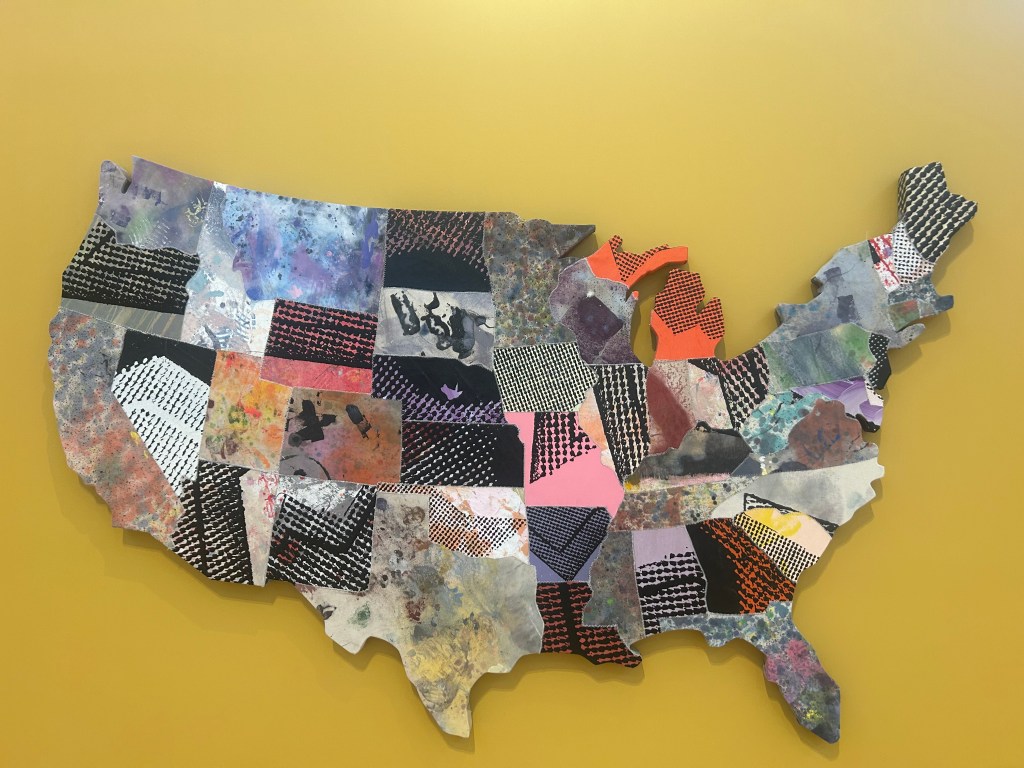
    Untitled (Map), 2022
    Nate Lowman 
    b. 1979, Las Vegas, NV

    Nate Lowman’s Map series offers a reinterpretation of American culture and identity. Each work depicting the contiguous United States is composed of paint-splattered and oil-stained drop cloths cut into state shapes and arranged in a collage. This technique creates a geography that is both familiar and reimagined, serving as a backdrop and stage for Lowman’s conceptual explorations.
    The series emphasizes that the nation is not a fixed entity but a dynamic, evolving patchwork of histories and identities. By serializing the map and alluding to historical shifts in borders and territories, Lowman challenges the illusion of permanence and stability in national identity.

    The work underscores the fluidity of borders and the ongoing shifts that define the American experience.
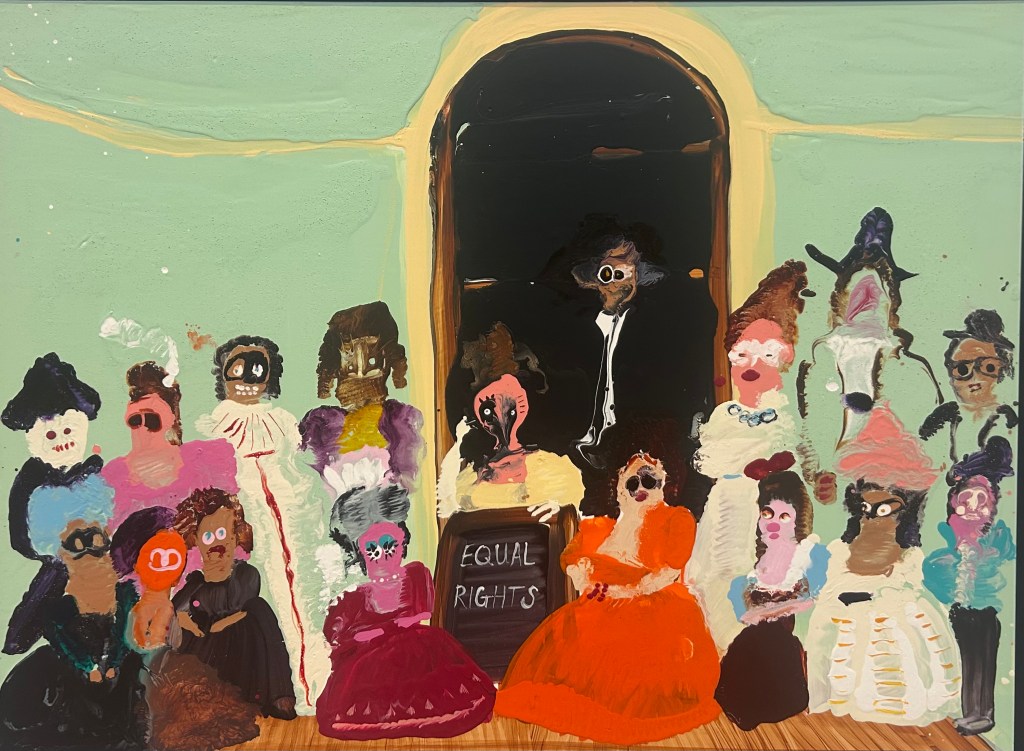
    Equal Rights, 2021
    Genieve Figgis
    b. 1972, Dublin, Ireland
    ​​
    Genieve Figgis’ Equal Rights reimagines the grandeur of eighteenth- and nineteenth-century commissioned portraiture, infusing this tradition with contemporary social relevance. The painting features an assembly of diverse figures portrayed through varying degrees of abstraction or absurdity. At the center, a woman prominently displays a sign that reads “Equal Rights,” a reference to a more contemporary time than the rest of the painting emulates. This deliberate addition transforms the scene into a stage for social change, vividly recalling evolving histories of justice, inclusion, and the pursuit of social equity.

    Figgis’ distinctive use of vibrant colors and thick, textured paint enhances the sense of spectacle, drawing attention to the layered narratives embedded within the work. The rich, almost decadent palette contrasts with the solemn message, adding dark humor to an otherwise traditional scene. This interplay of old and new, serious and satirical, invites viewers to consider the tensions between historical and contemporary social norms.
    AC Trio, 2016
    Mika Rottenberg
    b. 1976, Buenos Aires, Argentina

    Air conditioners, hot plates, pans, and plants 93 ½/2 × 50 × 36 in.
    Mika Rottenberg’s AC Trio features three window air conditioners creating a kinetic sculpture that juxtaposes absurdity with necessity. The units, with their aged exteriors and audible hum, evoke a familiar urban scene, particularly resonant for South Florida residents.

    Potted plants adorn the installation, humorously critiquing the token gesture of integrating flora into urban environments. Condensation drips from the AC units onto one such plant, providing it with water. Additional drips fall onto pots and pans seated on a hot plate below, producing a sibilant hiss as liquid transforms into vapor and reenters the water cycle. This contrived ecosystem highlights the shifting states of matter while also subtly staging a performative exploration of climate change. The precarious setup and continuous, seemingly purposeless production emphasize the theatrical interplay between human-made environments and natural processes, reflecting on humanity’s everyday interactions with the world.
    Control/Focus, 1997
    Tony Oursler
    b. 1957, New York, NY

    Video projector, two cloth dolls, wood shelf, and media player with USB drive Dimensions variable

    Tony Oursler’s practice explores the intersections of technology, identity, and media, creating immersive environments that evoke the intimacy of shadowbox theater. His work often features handmade, grotesque figures- creepy yet cute and reminiscent of puppets- whose faces are animated through video projection.

    These quasi-virtual beings live within low-tech, expressionistic worlds of the artist’s invention. In Control/Focus, Oursler casts two figures within a surreal and antagonistic conversation that critiques the alienation of contemporary society. With its layered soundscapes and narratives, the piece exemplifies Oursler’s ability to merge reality and illusion. His work prompts viewers to contemplate the profound effects of media and technology on the human condition.
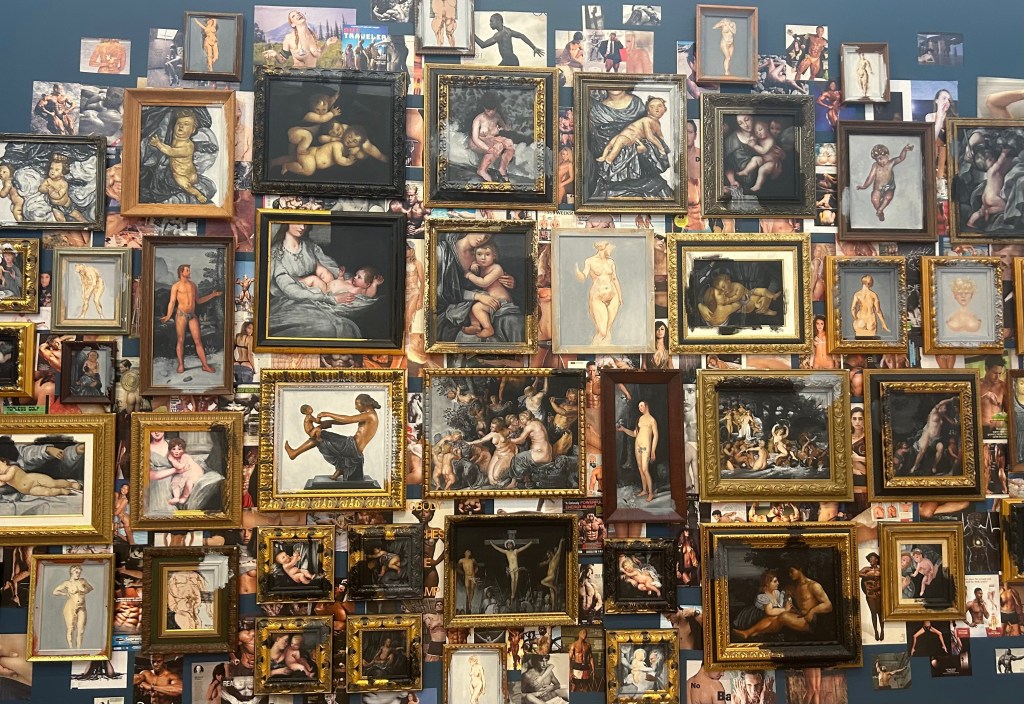
    The Nudist Museum, 2010
    Ellen Harvey 
    b. 1967, Kent, UK

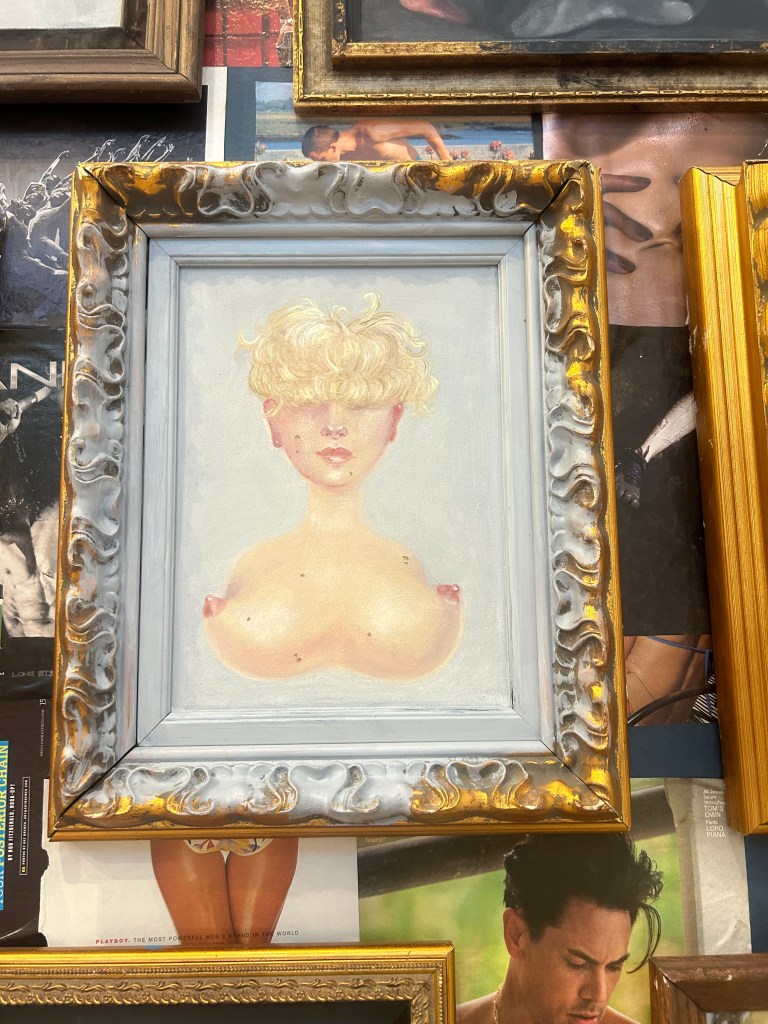
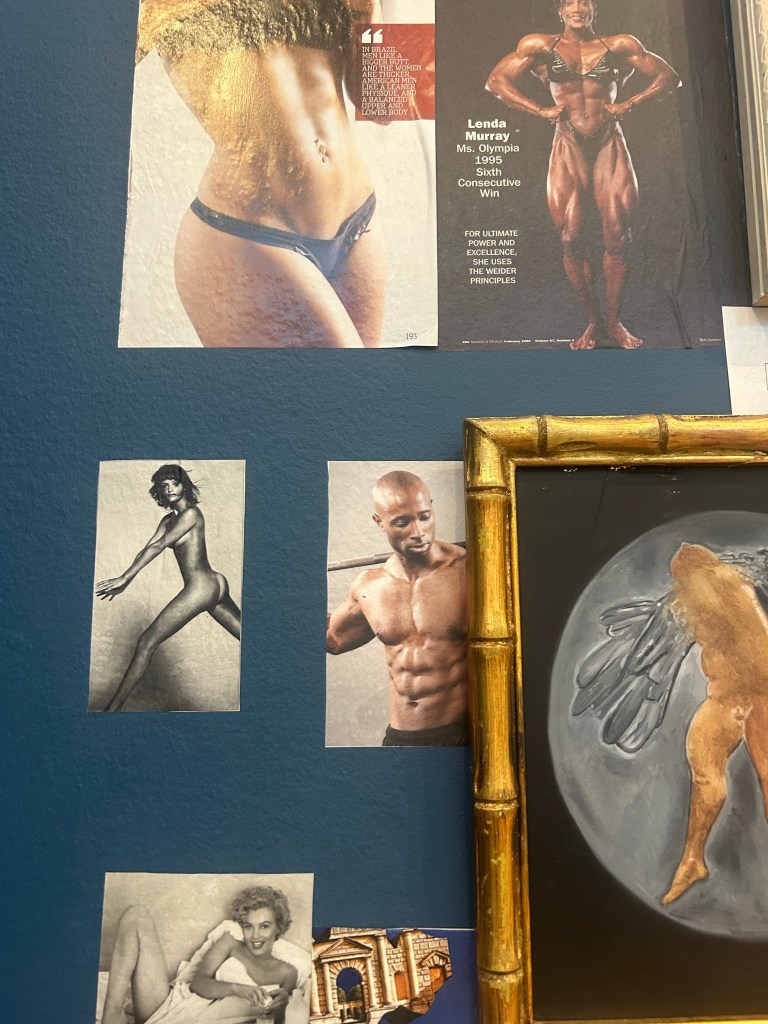
    Ellen Harvey’s The Nudist Museum explores historical and contemporary representations of the nude, questioning the underlying ideas that shape our perceptions of the body. In this work, Harvey paints imperfect reproductions of paintings, sculptures, and drawings from The Bass’ permanent collection-spanning the Middle Ages to the present-using only archival documentation as her reference. This method creates layers of distance from the originals, illustrating how our perceptions are shaped by visual contexts and historical frameworks, both seen and unseen. The artist recontextualizes works from The Bass’ collection within her broader critique of museum practices.

    Harvey assigns arbitrary flesh tones to the pictured bodies while rendering all other elements in monochromatic grays, a technique that isolates the figures and emphasizes how identity may be artificially highlighted or constructed.
    Some paintings present cropped views of figures, scrutinizing society’s often narrow perspectives on nudity.

    Reinforcing this critique, the paintings are installed above images collected from fashion, fitness, and pornographic magazines to starkly contrast historical and contemporary representations of the nude. The installation replicates traditional display methods, using stanchions and ornate frames to theatrically reveal how museums construct and impose narratives on art. Harvey’s approach challenges the way we engage with all art-including the nude-to prompt a deeper reflection on how context and framing influence our viewing.

    What piece stood out to you the most? How do you think performance shows up in your everyday life or in the spaces you move through? Drop your thoughts in the comments, we’d love to hear your perspective!

  • Afrofuturism in Art: Imagining Black Futures Through Creativity

    More than just a genre, Afrofuturism offers a powerful vision. Through the dynamic interplay of art, culture, and technology, this movement boldly reimagines the past and actively envisions radical Black futures.

    For a long time, Afrofuturism has served as a vital creative space where Black artists, writers, and thinkers have explored pathways to liberation through imagined futures. Deeply rooted in the fertile ground of science fiction, fantasy, and the rich tapestry of African diasporic history, Afrofuturism emerges as a potent tool for rewriting dominant narratives and confidently claiming both cosmic and cultural space.

    This imaginative spirit vividly manifests in the visual arts, taking shape in forms ranging from captivating surreal portraiture to thought-provoking speculative installations. Artists skillfully blend potent symbols of African heritage with cutting-edge futuristic aesthetics, often directly challenging the legacies of colonial histories and ongoing systems of oppression. These artistic explorations don’t merely speculate about a distant tomorrow; they powerfully reveal the urgent and radical possibilities inherent in the present moment.

    Whether expressed through immersive digital landscapes, evocative celestial themes, or the timeless power of mythic storytelling, Afrofuturist art resolutely centers Black imagination as a profound act of resistance, a pathway to healing, and a catalyst for transformative change. It extends an open invitation to us all to question the perceived boundaries of what is possible and to critically examine who holds the power to define the future.

    Key Themes You Might See:

    • Futuristic Black bodies and spaceships as potent metaphors for liberation.
    • Intriguing explorations of time travel and compelling alternate histories.
    • The vibrant integration of myths, ancestral wisdom, and spiritual elements drawn from diverse African cultures.
    • Seamless fusions of advanced sci-fi technology with the textures and rhythms of everyday Black life.

    Originally blossoming within the realm of African-American science fiction, Afrofuturism has now expanded its reach to encompass literature, music, and visual art, all unified by their exploration of the Black experience, particularly the enduring legacy of slavery, through speculative and futuristic lenses. Key figures who significantly shaped the development of Afrofuturism include visionary science fiction writers like Octavia Butler and Samuel R. Delany, alongside the cosmic jazz innovator Sun Ra, who crafted a compelling cosmic persona that artfully blended science fiction concepts with the mystique of ancient Egyptian traditions. At its very core, Afrofuturism embraces the power of otherness, skillfully employing imaginative storytelling to reframe historical narratives and courageously envision liberated Black futures.

    Ultimately, Afrofuturism transcends mere aesthetic appeal; it stands as a significant cultural intervention. In a world that frequently seeks to limit the scope of Black futures, Afrofuturist art serves as a powerful and vibrant reminder that there exists an infinite spectrum of ways to exist, to actively resist, and to imagine.

    Want to dive deeper into the work of the artists who are actively shaping this future? Continue exploring our Emerging Series, and don’t hesitate to submit the names of your favorite Afrofuturist creators for a chance to see them featured.

    Books to Explore:

    Leave us a comment! What does a liberated future look like to you?

  • 11 Must-Read Art Books to Deepen Your Art Appreciation

    Whether you’re just starting your art journey or looking to deepen your perspective, here are some of the books we can’t stop thinking about. From coffee-table essentials to sharp cultural critiques, these reads challenge, inspire, and change the way we see

    African Artists: From 1882 to Now
    Featured in The New York Times, ARTnews, Colossal, Metropolis, and New York Magazine’s The Strategist, this groundbreaking book surveys 300+ modern and contemporary artists born or based in Africa. Created with a global advisory board, it’s one of the most comprehensive resources of its kind—spotlighting legends like El Anatsui, Julie Mehretu, and Wangechi Mutu alongside rising stars. Expect bold visuals and sharp commentary across painting, sculpture, photography, performance, and more.

    The Art Book
    Phaidon’s bestselling The Art Book is a vibrant A–Z of 600+ artists across time—from medieval icons to modern trailblazers. Each artist is presented with a signature work and insightful text, making it both an accessible intro and a deep dive. This new edition adds 40 artists, including overlooked historical figures and visionaries like Hilma af Klint and Zanele Muholi. A staple for any art lover’s shelf.

    Ways of Seeing
    John Berger’s Ways of Seeing is a classic that reshaped how we think about images. He argues that our cultural and social conditioning affects not only how we interpret art, but how we see the world. Short, sharp, and deeply influential.

    On Writing: A Memoir of the Craft
    Part memoir, part masterclass, Stephen King’s On Writing is a candid look at creativity, discipline, and the writing life. From his early career to recovering after a near-fatal accident, King shows how storytelling and survival go hand-in-hand. Essential reading—not just for writers, but for anyone pursuing a creative path.

    The Artist’s Way
    Julia Cameron’s The Artist’s Way has helped millions reclaim their creativity through Morning Pages, Artist Dates, and practical tools for self-discovery. Whether you’re blocked, burned out, or just beginning, this book is a powerful guide to creative freedom.

    Art = Discovering Infinite Connections in Art History from The Metropolitan Museum of Art
    With over 800 works from The Met’s collection, Art = breaks art history out of its timeline and into dynamic, thematic connections. Based on the museum’s Heilbrunn Timeline of Art History, it features 160+ essays and a fold-out timeline. Perfect for those who want to see art from fresh, unexpected angles.

    A Black Gaze: Artists Changing How We See
    In A Black Gaze, Tina Campt explores how Black contemporary artists reshape how we engage with visual culture. Through the work of Deana Lawson, Arthur Jafa, Simone Leigh, and others, she reveals how these artists demand we look with, not at, Black life. A powerful, necessary read on vision, agency, and representation.

    How to Visit an Art Museum: Tips for a Truly Rewarding Visit
    Short, smart, and genuinely fun—How to Visit an Art Museum is full of tips and witty illustrations to help you get more out of your next visit. From decoding wall labels to using museum guards as allies, it’s an accessible guide for beginners and seasoned museum-goers alike.

    40 Contemporary Artists
    40 Contemporary Artists features a global selection of painters, sculptors, and installation artists originally discovered through Facebook’s art community. The book spans a range of styles—from figurative realism to expressive abstraction—and includes vibrant images and brief bios. Artists featured include Brenda Goodman, Farrell Brickhouse, and Marlene Aron, among others.

    For Freedoms: Where Do We Go From Here?
    Founded in 2016, For Freedoms is an artist-led collective that uses art to ignite civic dialogue and action. This book showcases 500+ billboards by 400 artists—including Carrie Mae Weems, Shepard Fairey, and Ai Weiwei—transforming public space into a platform for reflection and resistance. Timely, urgent, and deeply inspiring.

    Get the Picture: A Mind-Bending Journey among the Inspired Artists and Obsessive Art Fiends Who Taught Me How to See
    In Get the Picture, award-winning journalist Bianca Bosker delves into the art world, captivated by its obsession with beauty, value, and meaning. Immersing herself in the lives of gallerists, curators, and struggling artists, she uncovers the mechanisms behind art’s place in our culture. From attending high-society parties to working as a museum security guard, Bosker’s journey reveals not just the art world’s inner workings but also how art reshapes how we see and live. This engaging exploration challenges readers to rethink their relationship with art and its power to transform.

    We’d love to hear your recommendations and reflections. Share your thoughts in the comments!