The Bass Museum of Art’s latest exhibition, Performing Perspectives: A Collection in Dialogue, reimagines its permanent collection through the lens of performance as a defining force in contemporary life. Opened August 28, 2024, the show explores how performance permeates personal identity, digital presence, civic engagement, and even the role of institutions. Visitors are invited to consider how performance shapes everything from the personas we craft online to the ways cities like Miami Beach perform their roles as tourist destinations—and how museums, too, must perform to create meaningful, transformative experiences.
Organized into three thematic sections; Performance of Self, Backdrop for Performance, and Indexicality of Performance, the exhibition spans works from the Early Renaissance to today. Performance of Self delves into how identity has long been a subject of artistic expression, now amplified by the digital age’s fixation on self-curation. Backdrop for Performance examines how physical and social spaces influence behavior, exploring the ways context, whether a theater, city street, or gallery, shapes our movement and interactions. These works suggest that performance isn’t reserved for the stage, we’re always performing, subtly directed by the spaces we inhabit.
In Indexicality of Performance, the exhibition emphasizes that the meaning of artworks is fluid and ever-evolving. A Renaissance nude, a contemporary video installation, and a towering ceramic sculpture each reveal how context, social, cultural, and temporal, reshapes how we interpret art. This section highlights how meaning isn’t fixed, but constantly rewritten by history, media, and the viewer’s gaze.
Taken together, Performing Perspectives transforms the museum’s collection into a living dialogue on identity, space, and perception.
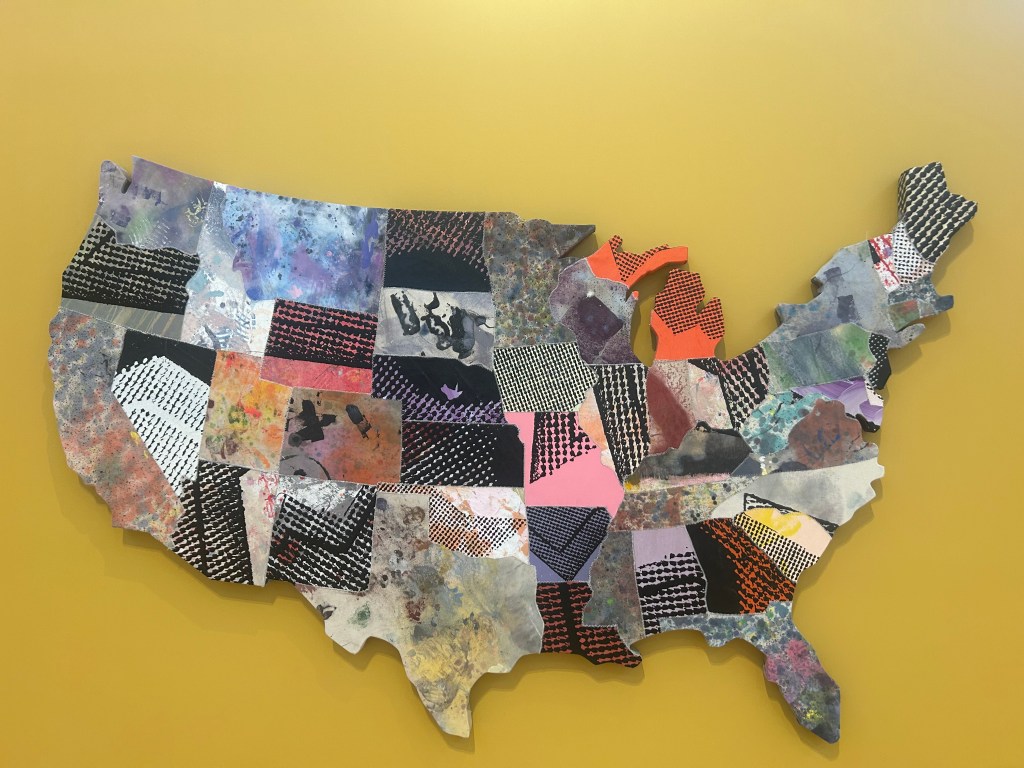
Nate Lowman
b. 1979, Las Vegas, NV
Nate Lowman’s Map series offers a reinterpretation of American culture and identity. Each work depicting the contiguous United States is composed of paint-splattered and oil-stained drop cloths cut into state shapes and arranged in a collage. This technique creates a geography that is both familiar and reimagined, serving as a backdrop and stage for Lowman’s conceptual explorations.
The series emphasizes that the nation is not a fixed entity but a dynamic, evolving patchwork of histories and identities. By serializing the map and alluding to historical shifts in borders and territories, Lowman challenges the illusion of permanence and stability in national identity.
The work underscores the fluidity of borders and the ongoing shifts that define the American experience.
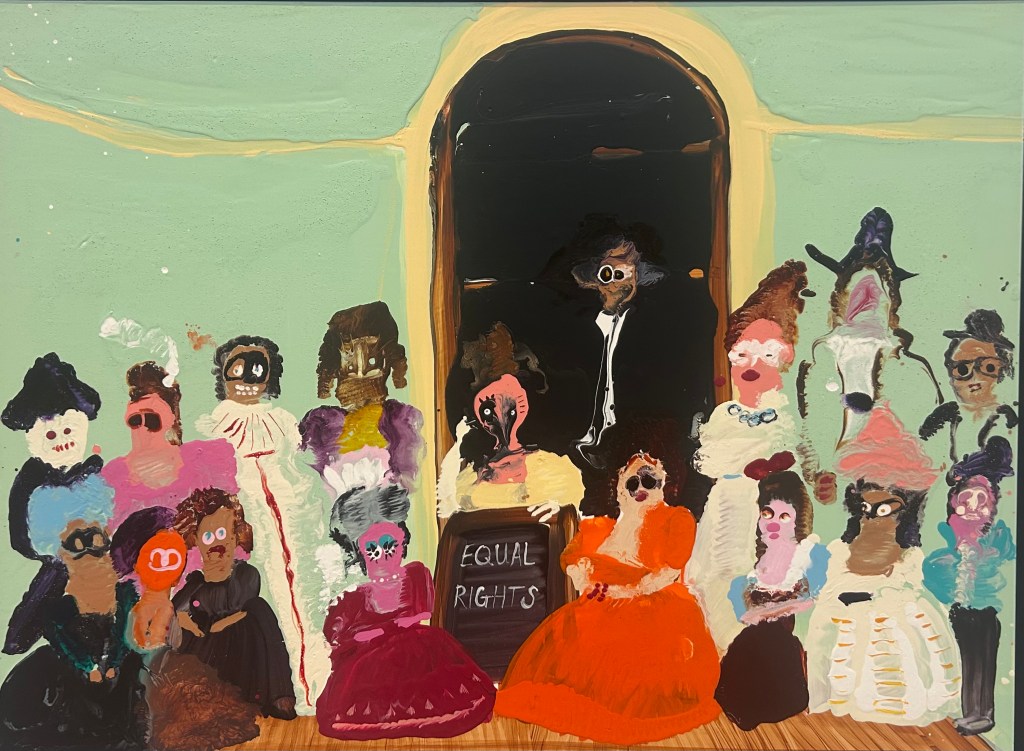
Genieve Figgis
b. 1972, Dublin, Ireland
Genieve Figgis’ Equal Rights reimagines the grandeur of eighteenth- and nineteenth-century commissioned portraiture, infusing this tradition with contemporary social relevance. The painting features an assembly of diverse figures portrayed through varying degrees of abstraction or absurdity. At the center, a woman prominently displays a sign that reads “Equal Rights,” a reference to a more contemporary time than the rest of the painting emulates. This deliberate addition transforms the scene into a stage for social change, vividly recalling evolving histories of justice, inclusion, and the pursuit of social equity.
Figgis’ distinctive use of vibrant colors and thick, textured paint enhances the sense of spectacle, drawing attention to the layered narratives embedded within the work. The rich, almost decadent palette contrasts with the solemn message, adding dark humor to an otherwise traditional scene. This interplay of old and new, serious and satirical, invites viewers to consider the tensions between historical and contemporary social norms.

Mika Rottenberg
b. 1976, Buenos Aires, Argentina
Air conditioners, hot plates, pans, and plants 93 ½/2 × 50 × 36 in.
Mika Rottenberg’s AC Trio features three window air conditioners creating a kinetic sculpture that juxtaposes absurdity with necessity. The units, with their aged exteriors and audible hum, evoke a familiar urban scene, particularly resonant for South Florida residents.
Potted plants adorn the installation, humorously critiquing the token gesture of integrating flora into urban environments. Condensation drips from the AC units onto one such plant, providing it with water. Additional drips fall onto pots and pans seated on a hot plate below, producing a sibilant hiss as liquid transforms into vapor and reenters the water cycle. This contrived ecosystem highlights the shifting states of matter while also subtly staging a performative exploration of climate change. The precarious setup and continuous, seemingly purposeless production emphasize the theatrical interplay between human-made environments and natural processes, reflecting on humanity’s everyday interactions with the world.
Tony Oursler
b. 1957, New York, NY
Video projector, two cloth dolls, wood shelf, and media player with USB drive Dimensions variable
Tony Oursler’s practice explores the intersections of technology, identity, and media, creating immersive environments that evoke the intimacy of shadowbox theater. His work often features handmade, grotesque figures- creepy yet cute and reminiscent of puppets- whose faces are animated through video projection.
These quasi-virtual beings live within low-tech, expressionistic worlds of the artist’s invention. In Control/Focus, Oursler casts two figures within a surreal and antagonistic conversation that critiques the alienation of contemporary society. With its layered soundscapes and narratives, the piece exemplifies Oursler’s ability to merge reality and illusion. His work prompts viewers to contemplate the profound effects of media and technology on the human condition.
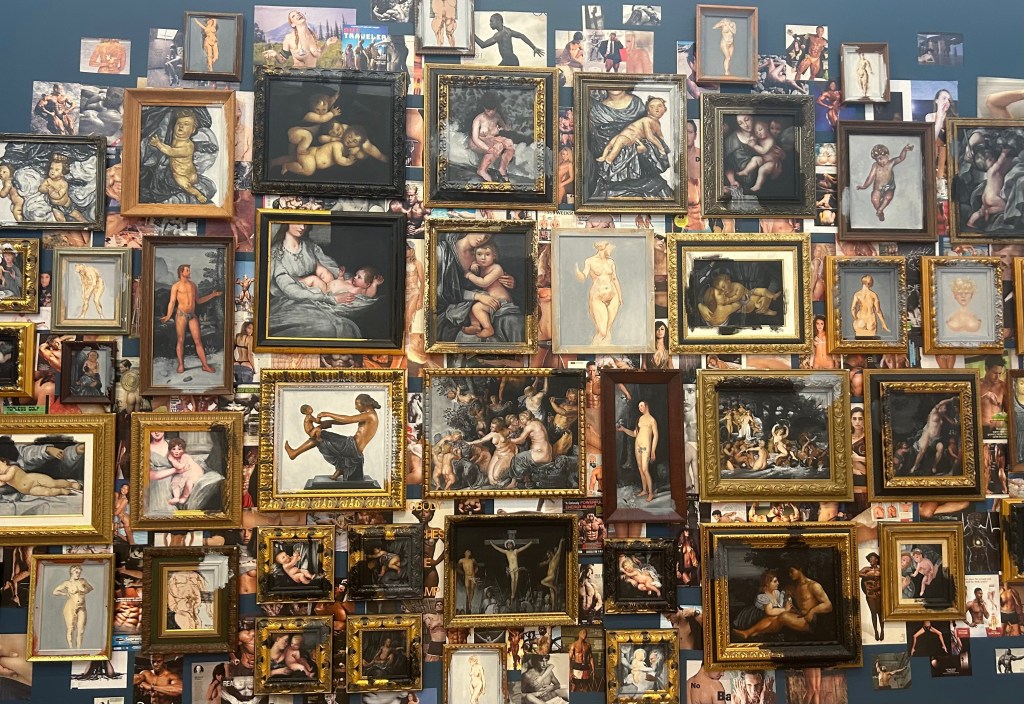
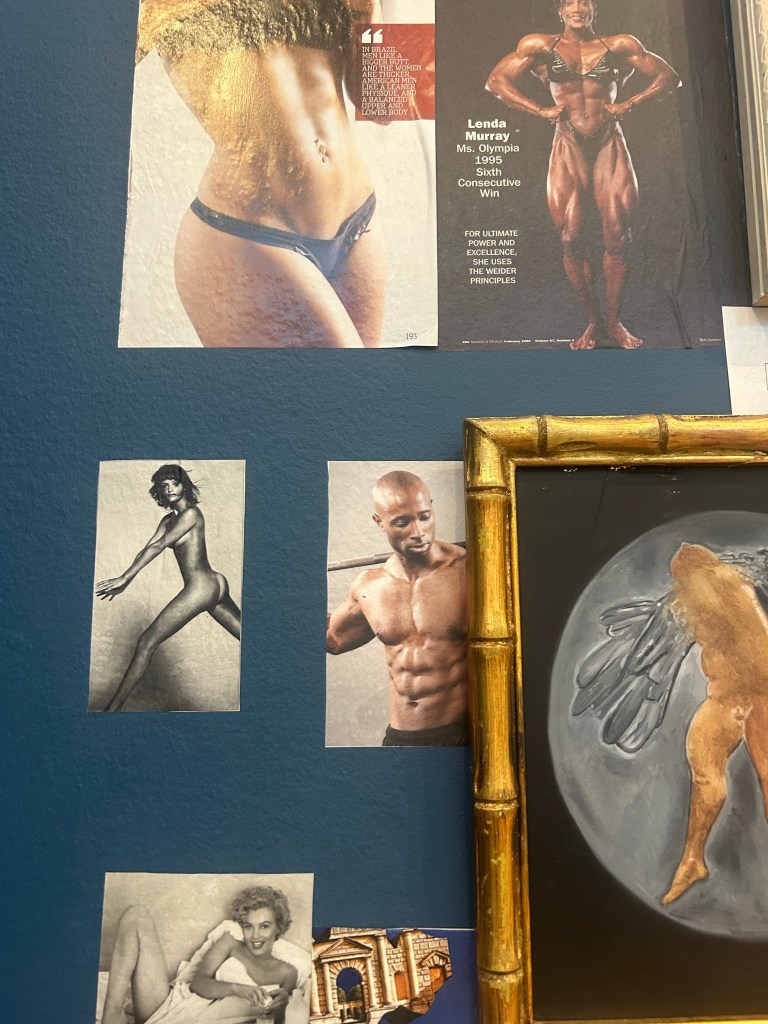
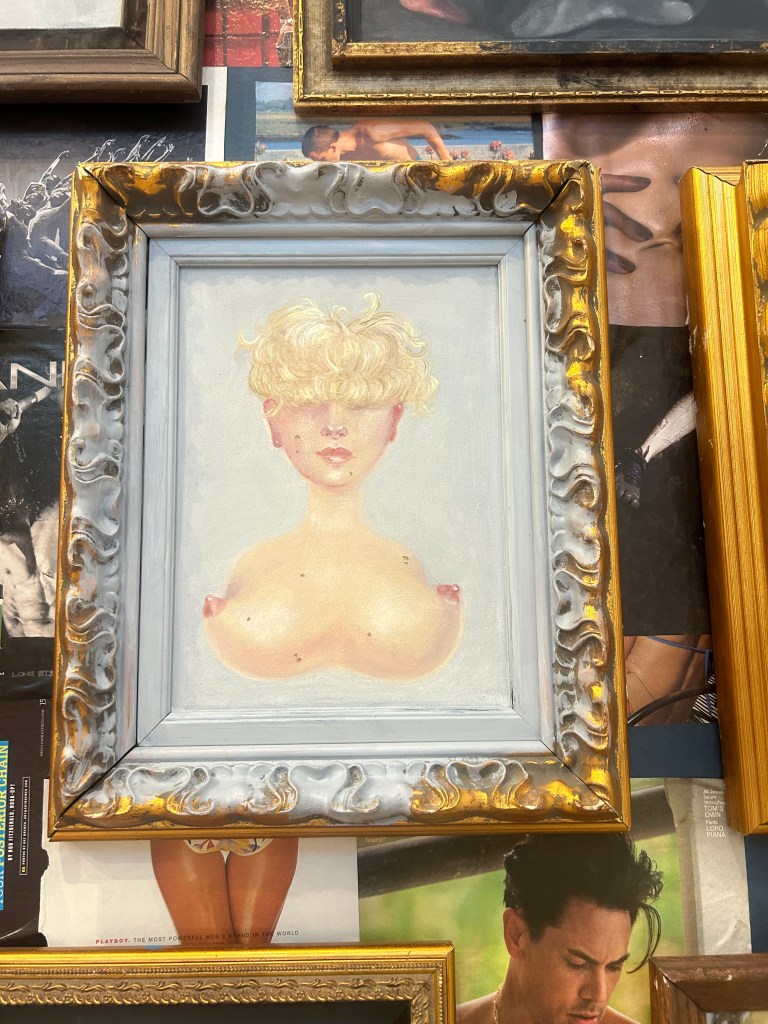

The Nudist Museum, 2010
Ellen Harvey
b. 1967, Kent, UK
Ellen Harvey’s The Nudist Museum explores historical and contemporary representations of the nude, questioning the underlying ideas that shape our perceptions of the body. In this work, Harvey paints imperfect reproductions of paintings, sculptures, and drawings from The Bass’ permanent collection-spanning the Middle Ages to the present-using only archival documentation as her reference. This method creates layers of distance from the originals, illustrating how our perceptions are shaped by visual contexts and historical frameworks, both seen and unseen. The artist recontextualizes works from The Bass’ collection within her broader critique of museum practices.
Harvey assigns arbitrary flesh tones to the pictured bodies while rendering all other elements in monochromatic grays, a technique that isolates the figures and emphasizes how identity may be artificially highlighted or constructed.
Some paintings present cropped views of figures, scrutinizing society’s often narrow perspectives on nudity.
Reinforcing this critique, the paintings are installed above images collected from fashion, fitness, and pornographic magazines to starkly contrast historical and contemporary representations of the nude. The installation replicates traditional display methods, using stanchions and ornate frames to theatrically reveal how museums construct and impose narratives on art. Harvey’s approach challenges the way we engage with all art-including the nude-to prompt a deeper reflection on how context and framing influence our viewing.
What piece stood out to you the most? How do you think performance shows up in your everyday life or in the spaces you move through? Drop your thoughts in the comments, we’d love to hear your perspective!
